How to get a transcript of a podcast with 98% accuracy
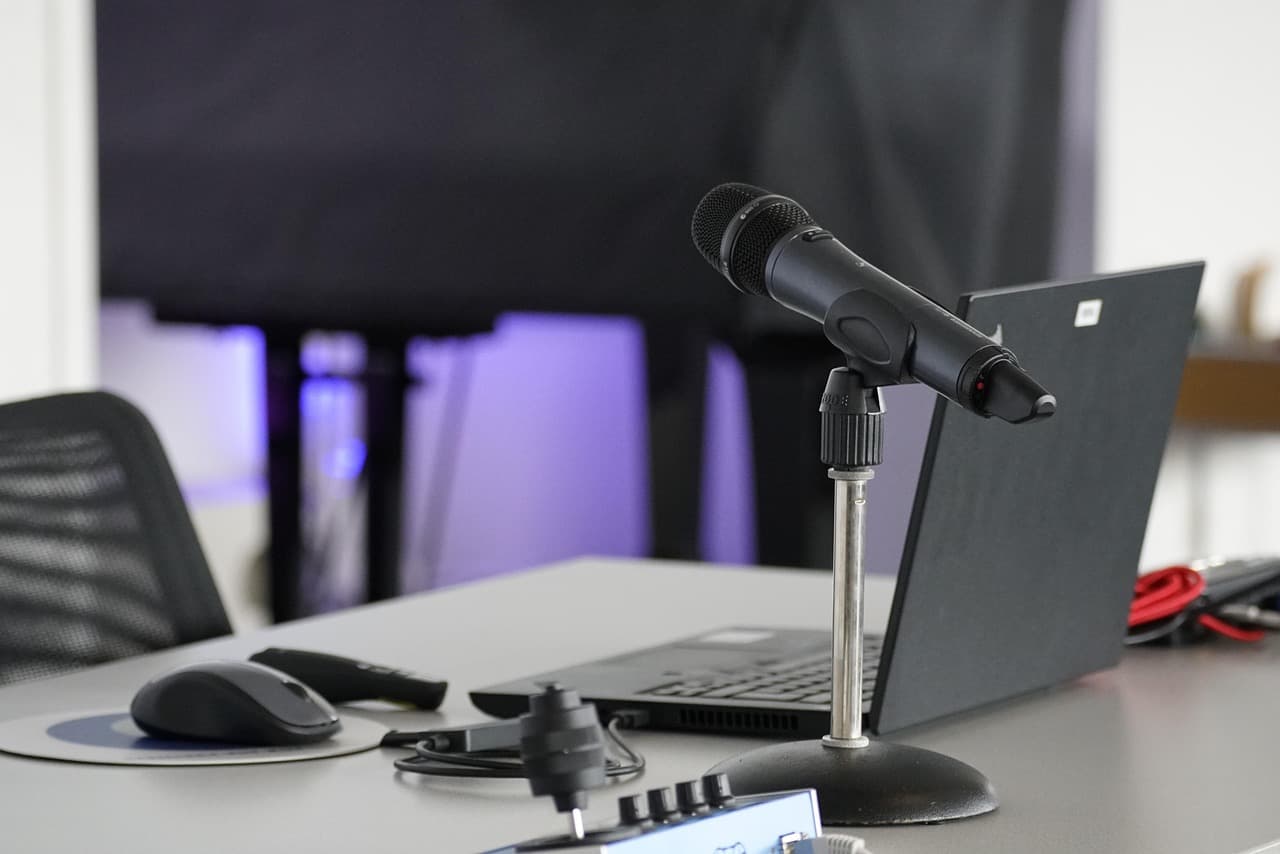
Key takeaway: Professional podcast transcription ensures 98% accuracy by combining AI diarization with secure European hosting. This workflow transforms raw audio into searchable, SEO-friendly text, saving hours of manual labor. With AES-256 encryption and GDPR compliance, Vook.ai protects sensitive data while instantly generating summaries and social media content to maximize your production's reach and professional impact.
Professional podcast transcription now reaches a 98% accuracy rate, transforming raw audio into a high-value textual asset in less than a minute. Yet, many creators still struggle with manual workflows that compromise data security and content discoverability. This guide explains how to get a transcript of a podcast using secure AI to streamline your production and protect sensitive information. We will examine the technical steps to integrate automated workflows that ensure professional precision and regulatory compliance.
How to Get a Transcript of a Podcast With Professional Accuracy
Professional podcast transcription achieves 98% accuracy by combining AI diarization with European-hosted security. High-quality results require processing raw audio through automated workflows that identify multiple speakers and generate time-stamped text for accessibility. The transition from a simple audio file to a structured document relies on a rigorous technical sequence that ensures every word is captured correctly.
The automated conversion workflow
Modern technology transforms raw audio waves into structured text almost instantly. AI handles the heavy lifting by analyzing frequencies and phonemes. This shift saves hours of tedious manual labor for professionals. Time-stamps are essential for navigation within long episodes. They allow users to find specific quotes quickly without scrubbing. Major publishers like the New York Times use third-party services for this functionality. It ensures the text remains searchable.
These workflows integrate directly into your production pipeline today. You upload a file and receive text in minutes. It is a seamless transition from sound to written word. Understanding how AI audio transcription works for professionals helps in choosing the right tools.
Maintaining the 98% accuracy standard
Professional standards demand 98% accuracy for reliable documentation. This level of precision minimizes the need for manual editing later. It ensures the message remains clear and professional for all readers. Clear audio quality is the foundation of high accuracy. Background noise or poor microphones can degrade the final transcript significantly. High-quality input yields high-quality output.
Automated precision now rivals human efforts in speed and detail. While humans might take hours, AI delivers results almost instantly. This efficiency is vital for high-frequency podcast productions and tight deadlines. Vook.ai maintains this 98% benchmark consistently across various industries. It provides a reliable base for consultants and researchers alike. Many consider it the best transcription tool for consultants who handle sensitive data.
Identifying speakers in multi-participant recordings
Speaker diarization is a technical necessity for interviews and panels. The AI distinguishes between different voices automatically during processing. This process labels each participant clearly in the transcript. It makes the conversation much easier to follow. Identifying who said what adds immense value to the final document. Projects like Podverse use AI to identify speakers across multiple episodes. This creates a structured dialogue format rather than a wall of text.
Proper labeling improves the readability of complex panel discussions. You can easily assign real names to the detected voices afterward. This transforms raw data into a professional document ready for publication.
Technical Steps to Process and Refine Podcast Audio Files
Once the accuracy standards are set, the actual technical handling of the files becomes the next priority for a smooth workflow.
Managing diverse audio and video formats
Professionals work with various file types daily. Whether it is MP3, WAV, or MP4, compatibility is key. You need a tool that handles them all without conversion. Large recordings require significant bandwidth and storage. Supporting files up to 6GB is a major advantage for long-form podcasts. This allows for high-resolution audio processing without compression. Mobile-friendly uploads further simplify the process for creators on the move.
MP3 for standard audio
WAV for uncompressed quality
MP4 for video-based podcasts
6GB limit for long sessions
Editing and refining the initial output
No automated system is perfect every time. An integrated text editor allows for quick refinements. You can fix technical jargon or specific proper names. Polishing the draft ensures a professional final version. This step is where you add your unique brand voice. It turns a transcript into a piece of content.
The goal of refining a transcript is not just to correct errors, but to ensure the final text serves as a reliable and professional extension of your brand's voice.
When choosing the right audio transcription tool, prioritize those offering built-in editing capabilities for rapid verification.
Exporting to professional document formats
Choosing the right export format depends on your goal. PDF is great for distribution and reading. DOCX works best for further editing and collaboration. Video creators need SRT or VTT files for subtitles. These formats sync text with audio perfectly. They are essential for platforms like YouTube or LinkedIn.
Researchers often require compatibility with tools like NVivo. Proper formatting during export saves hours of manual restructuring. This ensures your data is ready for qualitative analysis immediately. It bridges the gap between audio and research.
Using Integrated AI for Content Analysis and Repurposing
Beyond simple text conversion, the real power lies in how you leverage AI to analyze and repurpose that data.
Generating summaries and action items via LLM
Integrated AI chat features transform how we use transcripts. You can ask the AI to summarize the main points. This saves time for busy stakeholders and managers. Extracting key quotes becomes an automated task. The AI identifies the most impactful statements instantly. These are perfect for social media or executive summaries.
Feature | Purpose | Benefit |
Summarization | Condenses long audio into brief overviews. | Saves hours of manual review time. |
Action Item Extraction | Identifies tasks and next steps automatically. | Ensures accountability and project momentum. |
Sentiment Analysis | Evaluates the emotional tone of speakers. | Provides deeper context for qualitative research. |
Key Quote Identification | Pins the most relevant verbal statements. | Simplifies content creation for marketing. |
Improving SEO and discoverability with text
Search engines cannot crawl audio files effectively. Transcripts provide the text needed for indexing. This significantly boosts your podcast's visibility in search results. Turning a transcript into a blog post is a smart strategy. It allows you to target specific keywords naturally. Tools like SpotScribe help Spotify users generate these summaries. This increases the reach of your content. Keywords within the transcript help listeners find your show. It makes your content discoverable for niche topics. Text is the bridge between audio and new audiences using the best ai transcription software for secure professional data.
Enhancing accessibility for diverse audiences
Accessibility is a legal and ethical requirement. Transcripts make content available to the deaf or hard-of-hearing. This inclusivity expands your potential audience significantly. Organizations like the Washington Post commit to transcribing every episode. This ensures their journalism is accessible to everyone. It is a hallmark of professional and responsible content creation.
Text versions are also useful in quiet environments. People can read your podcast while commuting or in offices. It provides flexibility for how content is consumed.
Security Standards for Handling Sensitive Podcast Data
While accessibility and SEO are vital, they must not come at the cost of data security and privacy.
Prioritizing European hosting and GDPR compliance
Data residency in Europe offers superior legal protection. It ensures compliance with strict GDPR regulations. This is a non-negotiable requirement for many professional sectors. Contrast European hosting with non-EU cloud providers. Many services store data in jurisdictions with weaker privacy laws. Choosing a European provider like Vook.ai keeps your sensitive information under local protection. It builds trust with your interviewees.
GDPR compliance is about more than just rules. It is about respecting the privacy of your subjects. It ensures your workflow meets international professional standards according to our Privacy Policy.
Applying encryption for data
Encryption is the gold standard for security. It protects your files while they are stored on servers. This prevents unauthorized access to sensitive interview data. Unique account keys provide an additional layer of safety. Your data remains yours alone. This level of encryption is used by financial institutions worldwide.
Verifying data ownership and training policies
Your data should never be used for AI training. This is a common concern with many free tools. Professional platforms guarantee full intellectual property rights. Privacy by design is the core philosophy. Security is built into every step of the process. It is not an afterthought or a feature.
No data used for AI training
User retains 100% IP rights
Automatic deletion options available
Secure audit logs for activity.
You can Get Started for Free to test these professional standards yourself and achieve a transcription accuracy of up to 98%.
By prioritizing 98% accuracy, speaker diarization, and GDPR-compliant hosting, you secure your intellectual property while maximizing reach. Start using these professional workflows now to transform your audio into searchable, accessible assets. Your future content strategy will be faster, safer, and significantly more impactful.
FAQ
To achieve professional-grade results, the ideal workflow involves using an AI-powered platform that combines automated transcription with advanced speaker diarization. By uploading your audio to a secure service like Vook.ai, you can convert recordings into text with up to 98% accuracy. This process significantly reduces manual labor, delivering a structured document in minutes. For those handling sensitive or strategic content, it is essential to ensure the audio is clear and free of background noise. The system automatically identifies different participants and applies precise time-stamps, which are vital for navigating long-form discussions or extracting specific quotes for professional reports.
Professional workflows often require diverse output formats. Exporting to DOCX is preferred for further editing, qualitative analysis, or integration into formal documents. Conversely, SRT or VTT formats are indispensable for video-based podcasts, as they provide the synchronized time-stamps necessary for accurate subtitling and improved accessibility on platforms like YouTube or LinkedIn. Vook.ai simplifies this technical step by offering direct exportation into these popular formats, including PDF and Markdown. This flexibility ensures that whether you are a researcher needing a text-based reference or a content creator requiring subtitles, the transition from audio to a professional document is seamless and efficient.
Beyond simple text conversion, integrated AI analysis serves as a powerful tool for strategic content repurposing. By leveraging Large Language Models (LLMs), professionals can instantly generate executive summaries, identify key action items, and extract impactful quotes. This automated analysis transforms a raw transcript into a suite of marketing or research assets, such as blog posts, social media snippets, or meeting minutes. Tools like the integrated AI chat on Vook.ai allow users to interact directly with their transcripts. You can ask the AI to synthesize complex discussions or highlight specific themes, which significantly enhances SEO and discoverability. This approach ensures that your audio content reaches a wider audience through searchable, high-quality text.
While many free tools exist, they often compromise on data privacy or use your information to train their algorithms. Vook.ai offers a professional alternative with a free tier that allows for one short transcription per day without requiring a credit card. This allows users to test the platform' accuracy and speed within a secure, GDPR-compliant environment. For professionals handling confidential interviews or proprietary data, Vook.ai ensures that all information remains private. Data is protected by AES-256 encryption and hosted exclusively on European servers. Most importantly, your data is never used for AI training, ensuring you retain 100% of your intellectual property rights even when using the entry-level services.
A professional transcription service must accommodate a wide range of technical specifications to fit into existing production pipelines. Vook.ai supports a comprehensive list of audio formats. This eliminates the need for time-consuming file conversions before processing. The platform is designed to handle large-scale projects, supporting files up to 6GB with no limit on the duration of the recording. This capacity is particularly beneficial for long-form investigative podcasts or full-day seminars, providing a reliable and robust solution for high-volume professional requirements.
About the author
